Enhancing Workplace Adaptability and Career Resilience in Singapore’s Competitive Job Market

Navigating Singapore’s job market today can feel overwhelming. Industries are shifting, AI and automation are changing how we work, and some roles that once felt secure are becoming obsolete. If you’re facing retrenchment, looking for a change, or simply wondering how to stay relevant, you’re not alone.
While change can be daunting, it can also open new doors. The key to success lies in fostering adaptability in the workplace—learning how to adjust, upskill, and embrace new opportunities, even in uncertain times. This guide explores practical ways to build career resilience, stay employable, and take charge of your professional growth.
Key Takeaways
- Singapore’s job market remains dynamic, with stable unemployment rates but slower employment growth and rising retrenchments.
- Emerging trends like AI-driven job transformations, increasing demand for digital skills, and the rise of remote work highlight the importance of adaptability in the workplace.
- Build career resilience by investing in continuous learning, expanding your network, staying proactive in career growth, and remaining future-focused.
- Leverage resources from reputable institutions like e2i to create a structured career development plan.
Understanding Singapore’s Job Market in 2025
Before making any career moves, it’s important to understand what’s happening in Singapore’s job market. Knowing which industries are growing, where challenges lie, and how job roles are evolving will help you develop adaptability in the workplace and stay ahead.
A Labour Market in Transition
According to the Ministry of Manpower (MOM), the job market experienced notable developments in 2025:
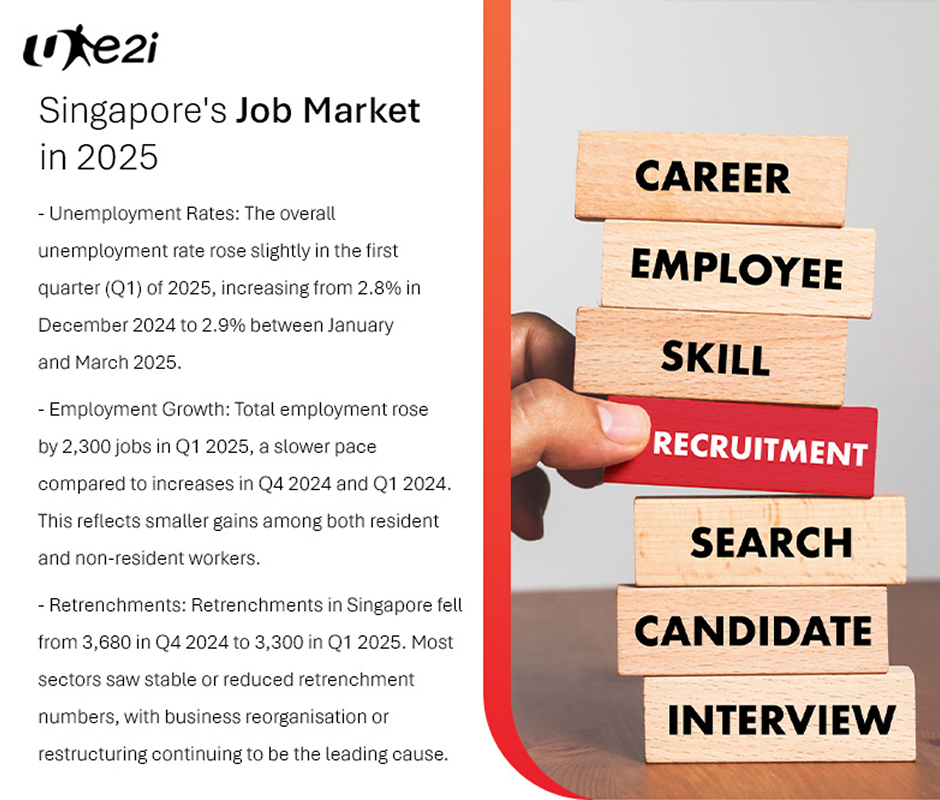
- Unemployment Rates: The overall unemployment rate rose slightly in the first quarter (Q1) of 2025, increasing from 2.8% in December 2024 to 2.9% between January and March 2025.
- Employment Growth: Total employment rose by 2,300 jobs in Q1 2025, a slower pace compared to increases in Q4 2024 and Q1 2024. This reflects smaller gains among both resident and non-resident workers.
- Retrenchments: Retrenchments in Singapore fell from 3,680 in Q4 2024 to 3,300 in Q1 2025. Most sectors saw stable or reduced retrenchment numbers, with business reorganisation or restructuring continuing to be the leading cause.
Emerging Trends and Opportunities
There are also several employment trends and opportunities to look out for in Singapore:
- Tech advancements: AI, automation, and machine learning are transforming industries, streamlining processes, and increasing efficiency. While these technologies create new job opportunities, they also pose a threat to administrative roles and even jobs in the creative and tech sectors.
- Emerging roles and skills in demand: As industries evolve, job roles are shifting, with high demand for expertise in digital marketing, cybersecurity, and data analytics. Companies are looking for professionals who can leverage data for business growth and enhance cybersecurity frameworks.
- The rise of remote work: Hybrid and flexible work arrangements have become the norm, allowing employees to work from anywhere while maintaining productivity.
While sectors like F&B, travel, and electronics are expanding, others—such as banking and commodities trading—may face ongoing challenges due to global economic shifts. This is why adaptability in the workplace is critical; staying open to new skills, industries, and career pathways will ensure long-term employability in a rapidly-evolving job market.
A Guide to Building Adaptability in the Workplace
In these unpredictable times, career resilience is what sets adaptable professionals apart. Here’s how you can build the adaptability needed to navigate career shifts in the workplace confidently.
What is Career Resilience and Why Does It Matter?

Career resilience is the ability to adapt, bounce back, and thrive in the face of challenges, setbacks, and changes in the professional environment. It’s about continuously building your assets and skills so you can navigate uncertainties and seize new opportunities. By actively improving yourself—whether through upskilling, expanding your network, or gaining new experiences—you position yourself as a valuable candidate to prospective employers, even in a competitive job market.
Today, stagnation is not an option. According to LinkedIn’s Future of Skills report, skills across industries in Singapore have changed by an average of 41.21% since 2015. This shift highlights the need for professionals to stay agile, embrace lifelong learning, and cultivate a resilient mindset. Future-proofing your skills not only keeps you relevant and competitive, but also safeguards your employability. Fostering adaptability in the workplace is crucial for helping you build a meaningful and sustainable career in the long run.

Key Components of Career Resilience
If you wish to improve your adaptability in the workplace, here are four areas to focus on:
1. Continuous Learning and Skill Development
Staying relevant in today’s workforce requires a commitment to lifelong learning and upskilling. With emerging technologies like AI, automation, and digital transformation reshaping industries, professionals must regularly update their skills and explore new areas of expertise. Take advantage of training programmes, certifications, and industry workshops to stay ahead of the curve and enhance your agility.
2. Build a Strong Professional Network
Your network is one of your most valuable career assets, providing insights, support, and potential job opportunities. Consider these ways to expand your network:
Join mentorship programmes: Connect with experienced mentors who can offer guidance and career advice.
Engage on LinkedIn: Build relationships by connecting with industry leaders, participating in discussions, and sharing insights within your field.
Attend industry events and seminars: Networking events, career fairs, and professional workshops provide opportunities to meet like-minded professionals and stay updated on industry trends.
3. Take Charge of Your Career
Don’t wait for opportunities to come to you. Take initiative and employ effective career planning strategies to enhance your adaptability in the workplace.
Take on leadership roles: Volunteer for team lead positions, mentorship roles, or project management opportunities to build leadership experience and showcase your ability to drive results.
Create a structured career development plan: Map out a learning strategy to stay ahead in your field.
Engage in cross-functional projects: Work with different teams or departments to gain diverse experiences, develop new skills, and expand your professional network—making you a more versatile and valuable employee.
4. Be Future-Focused
The job market is constantly evolving, and staying ahead requires a forward-thinking mindset. Instead of focusing only on immediate career moves, take the time to research industry trends, emerging skills, and future job opportunities. Keep an eye on technological advancements and shifts in demand within your sector, so you can anticipate changes and upskill accordingly. By staying informed and demonstrating workplace adaptability, you’ll position yourself as a future-ready professional, capable of seizing new opportunities as they arise.
How to Create Your Own Career Resilience Plan
There is no one-size-fits-all approach to building adaptability in the workplace. Each individual’s journey is different, and having a structured plan can help you stay competitive and prepared for future challenges. Here’s how you can craft a personalised plan:
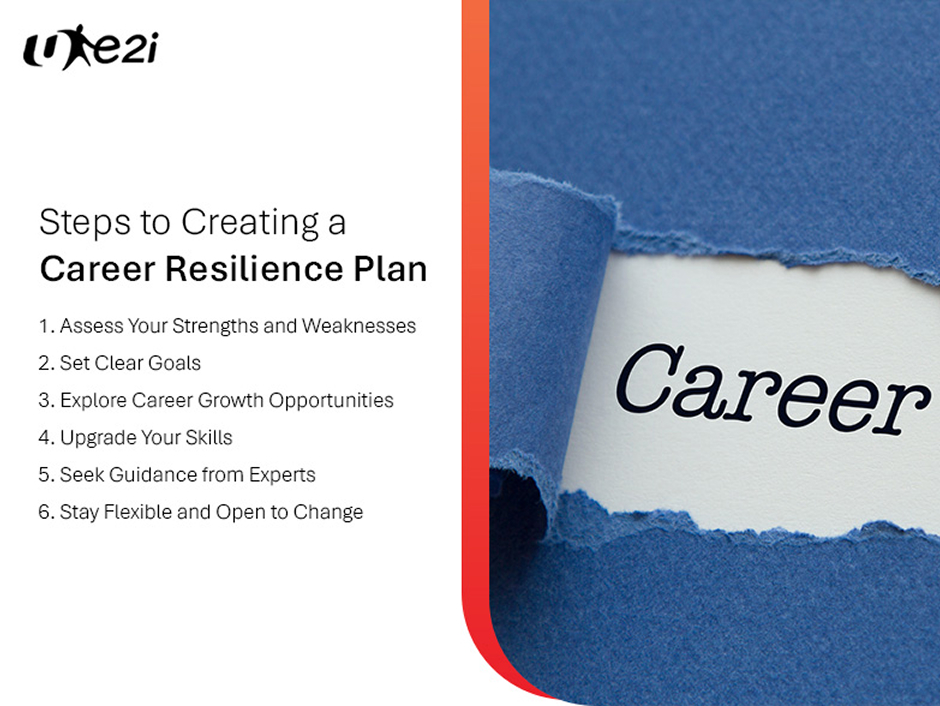
1. Assess Your Strengths and Weaknesses
Understanding your strengths, weaknesses, and areas for improvement is the first step.
- Evaluate your current skill set: List the technical and soft skills required for your role and industry, and assess where you currently stand. Consider core competencies, transferable skills, and skill gaps that could limit your career growth.
- Use tools and career resource: Use self-assessments, performance reviews, and career development frameworks to gain valuable insights.
- Seek feedback: Ask colleagues, mentors, or supervisors for constructive feedback on areas you can develop further.
2. Set Clear Goals
Adaptability in the workplace and a successful career are built on purposeful planning. Start by defining both your short- and long-term career goals that align with your aspirations. Short-term goals might include completing a certification or leading a project, while long-term goals could involve moving into a leadership position, making a mid-career change, or launching your own business. Having clear goals gives you direction, keeps you motivated, and helps you make better career decisions.
3. Explore Career Growth Opportunities
Your next opportunity could lie within your current organisation or in a completely different industry. Here are some ways to grow your career:
- Look for internal opportunities: Seek leadership roles, take on special projects, or participate in job rotations within your organisation to expand your expertise.
- Consider cross-industry opportunities: If your current sector is slowing down, explore how your skills could be applied to growth industries like technology, sustainability, or healthcare. Making a career switch into these fields can open up new opportunities.
- Stay informed about job market trends: Follow employment updates from e2i, the Ministry of Manpower (MOM) labour statistics, and industry-specific reports to understand where demand is growing.
4. Upgrade Your Skills
If you want to stay relevant and competitive, continuous learning is key. As industries evolve, upskilling and reskilling can open new doors and strengthen your adaptability in the workplace.
- Enrol in subsidised training programmes: The Union Training Assistance Programme (UTAP), supported by the NTUC-Education and Training Fund (NETF), offers financial support for professionals looking to upgrade their skills.
- Use MySkillsFuture: This national platform provides a range of upskilling courses, from technical certifications to leadership training.
- Attend industry workshops and events: These hands-on learning experiences help you build expertise while expanding your professional network.
By staying proactive in your learning, you’ll enhance your employability and remain a valuable asset, no matter how the job market shifts.
5. Seek Guidance from Experts
Gaining insights from experienced professionals can fast-track your career growth and help improve your adaptability in the workplace. If you’re looking to start building meaningful connections within your industry, here are some ways to get started:
- Join mentorship programmes: Platforms like Mentoring.sg connect professionals with mentors who can provide guidance, industry insights, and career advice. This is especially beneficial for youths and individuals new to the job market.
- Engage with career coaching services: Career coaching can refine your job search strategy, resume, and interview skills, guiding you towards relevant opportunities.
Having the right support system makes it easier to navigate career transitions and seize new opportunities with confidence.
6. Stay Flexible and Open to Change
No career follows a straight path. Industries change, new job roles emerge, and sometimes, unexpected events like retrenchment or company restructuring can push you in a different direction. The key to long-term success is being able to adapt, embrace new challenges, and explore alternative career paths. Instead of fearing uncertainty, treat it as a valuable opportunity to learn, grow, and discover new possibilities.
By building career resilience and adaptability in the workplace, you’ll future-proof your career and confidently take on whatever comes next.
Frequently Asked Questions
1. What resources does e2i offer for career development?
e2i provides a range of training programmes, workshops, and career coaching services to help individuals enhance their professional skills and career prospects. Businesses can also tap into NTUC’s CTC grant to support employee training and workforce development.
2. How can I switch jobs effectively?
Fostering adaptability in the workplace ensures a smoother transition into new roles. Start by identifying your transferable skills and exploring training programmes that align with your target industry. Networking with professionals in your desired field can provide valuable insights and job leads. Additionally, crafting a strong, well-tailored resume can significantly boost your employability.
3. What strategies can help with a successful job search?
A successful job search involves more than just submitting applications. Build a professional online presence, actively network, and customise your resume for each job application to stand out from the competition. Leveraging job portals, attending career fairs, and seeking career coaching can also enhance workplace adaptability and improve your chances of landing a job.
4. How can I stay competitive and relevant in Singapore’s job market?
Staying competitive requires a continuous learning mindset and professional adaptability. Focus on diversifying your skill set, staying updated with industry trends, and embracing new opportunities as they arise. Investing in upskilling, networking, and professional development will drive workplace adaptability and help future-proof your career in Singapore’s evolving employment landscape.
Taking the Next Step in Career Resilience and Workplace Adaptability
Singapore’s job market will continue to change, and the best way to stay ahead is to enhance your adaptability in the workplace. By developing career resilience, upskilling regularly, and keeping an open mind to new opportunities, it’s possible to create a fulfilling and sustainable career.
If you’re looking for ways to boost your employability, e2i is here to help. With expert career coaching and a range of upskilling initiatives in Singapore, you’ll have the support you need to take charge of your professional future. Contact us today to take the next step!